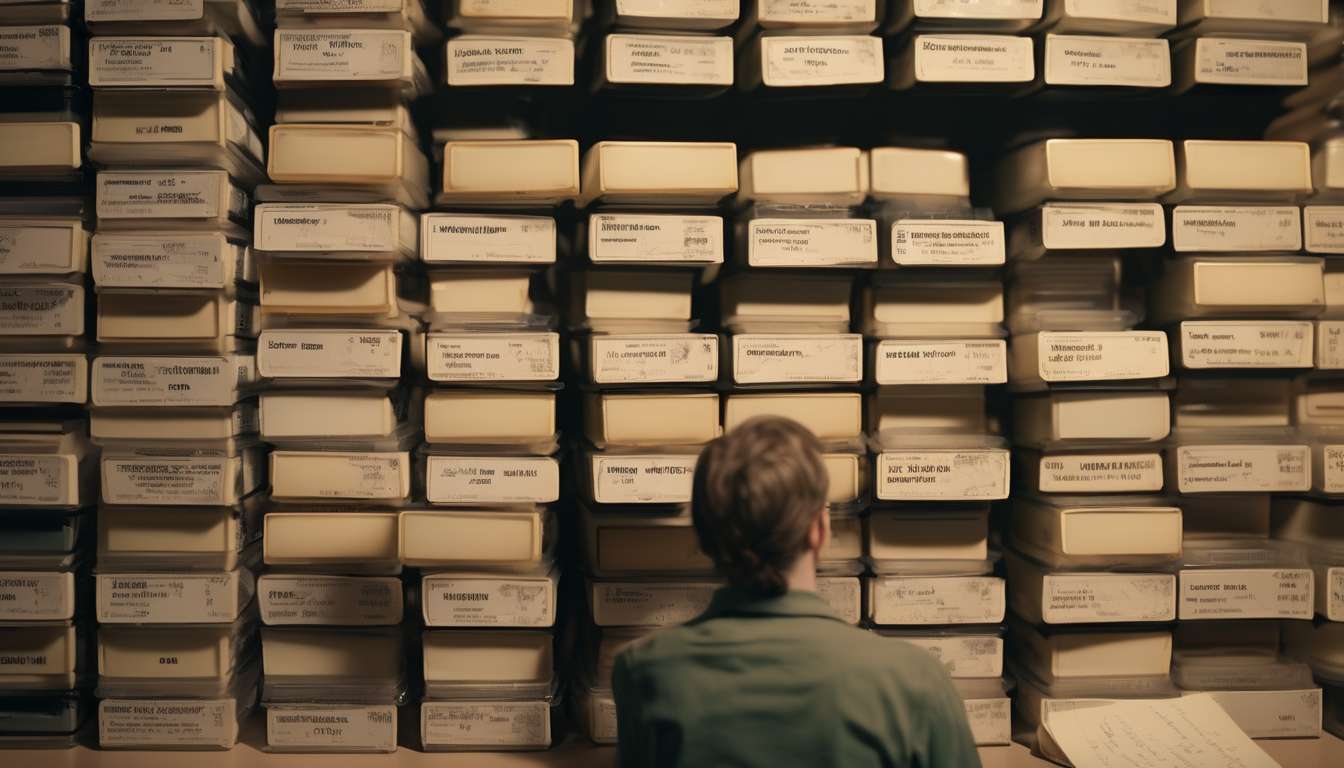
The adult film industry generates an estimated $15 billion in ancillary revenues annually, and much of its corporate memory was vanishing.
As archivists and researchers, we approached studios, distributors, and performers to map ledgers, contracts, and marketing files that reveal how this business truly operates.
What we found:
- Carefully kept budgets that dispel simplistic assumptions about revenues and costs.
- Performer contracts that document evolving rights and terms.
- Distribution records that trace technological shifts from videotape to streaming.
Why preservation matters:
- It’s not about prurient interest — it’s about economic history, labor practices, intellectual property, and cultural influence.
- Robust archive systems can protect vulnerable workers, enable scholars to trace regulatory impacts, and provide industry players with institutional knowledge that informs strategy.
Our approach to building repositories:
- Create archives with clear access policies.
- Implement ethical stewardship practices.
- Balance preservation with privacy to protect individuals while maintaining historical utility.
Goal: Ensure these business records serve scholarship, accountability, and an accurate historical record.
Industry Financial Archives
We catalog income statements, payroll records, contracts, and distribution ledgers to track how adult‑film revenues and expenditures shaped the industry’s development.
We prioritize archival preservation so community members can study economic patterns without losing context or provenance.
We tag items with clear performer metadata that respects identity, role, and consent histories, making retrieval meaningful for researchers and peers who want accurate representation.
We implement access protocols that balance transparency with privacy, creating tiers for public summaries, restricted researcher access, and confidential personnel files.
We maintain standardized descriptions and checksum‑backed storage to prevent drift and data loss, and we log all access to ensure accountability.
We foster a collaborative environment where archivists, performers, and scholars contribute to appraisal criteria, so everyone feels invested in stewardship.
We review retention schedules regularly and update our workflows as legal and ethical norms evolve, ensuring these financial archives remain a reliable resource for understanding industry dynamics while protecting individual dignity and fostering long‑term community trust.
Contractual Records Preservation
We preserve contracts, addenda, and consent forms with clear provenance and versioning so researchers and participants can trace obligations, rights, and changes over time.
We organize contractual records within an archival preservation framework that balances confidentiality and community trust.
We tag documents with performer metadata to link agreements to creators while protecting sensitive identifiers through controlled redaction and encryption.
We document chain-of-custody and amendment histories, so everyone in our community can see who approved changes and when.
We define role-based access protocols that let contributors, legal teams, and vetted researchers retrieve needed records without exposing personal data unnecessarily.
We maintain retention schedules aligned with legal obligations and ethical commitments, and we audit requests to ensure transparency.
We train staff and volunteers in consistent metadata practices and consent-aware handling so the people represented feel respected and included.
We aim to create a durable, accountable record that supports rights, scholarship, and shared stewardship of the industry’s contractual history.
Distribution and Format Logs
We track every distribution channel and file format iteration so researchers can see how content was delivered, transformed, and preserved over time.
We log tape runs, digital transfers, encoding settings, and platform deliveries in a consistent schema that supports archival preservation and reproducible research.
We capture checksum histories, format migration notes, and delivery manifests so the community can trace provenance without guesswork.
We include performer metadata references in logs only as necessary to link assets to existing records, and we separate sensitive fields under strict access protocols to uphold respect and privacy within our shared circle.
We document embargoes, licensing windows, and redaction actions alongside technical changes so future users understand both why and how content changed.
We maintain an accessible index that members can query for format lineage, resolution variants, and distribution endpoints.
By standardizing these logs, we create a trusted, inclusive resource that preserves technical and contextual integrity while honoring contributors and researchers alike.
Performer Metadata Safeguards
We limit which performer details we record, encrypt sensitive fields, and restrict who can decrypt them so we can protect privacy while keeping necessary links for research.
We treat performer metadata as a controlled asset within our archival preservation program.
- We catalog stage names, role contexts, and consent records.
- We avoid retaining unnecessary identifiers.
We design clear schemas that separate public descriptive fields from encrypted identifiers, and we log any schema changes to preserve provenance.
- Public descriptive fields are accessible for discovery and research.
- Identifiers and linkage fields are encrypted and access-controlled.
- All schema changes are recorded to maintain provenance and reproducibility.
We enforce role-based access protocols so team members feel included and accountable.
- Roles and permissions are clearly defined.
- Training and shared standards help everyone understand why limits exist.
We perform regular audits, maintain tamper-evident logs, and use secure key management to prevent unauthorized decryption.
- Regular audits verify policy compliance.
- Tamper-evident logging provides an audit trail.
- Secure key management limits who can decrypt linkage fields.
When researchers request linked information, we evaluate requests against ethical criteria and retention policies, applying minimal disclosure principles.
- Requests are assessed for purpose, necessity, and risk.
- Only the minimum data required for approved research is disclosed.
- Disclosure decisions follow documented retention and consent records.
Our approach balances community trust, scholarly value, and legal obligations, so contributors and staff alike know their work supports respectful, sustainable archival preservation of performer metadata.
Privacy and Access Protocols
We define clear, role-based privacy and access protocols.
-
Roles are mapped to minimal necessary privileges.
- Researchers, rights holders, and staff each receive only the access required for their functions.
- We document why each role needs access to specific performer metadata or financial fields.
-
Protocols limit who can see sensitive fields, how requests are evaluated, and what auditing mechanisms enforce compliance.
We build protocols around archival preservation principles.
- Preserve records while protecting privacy.
- Ensure records remain intact and discoverable even when access is restricted.
- Use preservation-aware redaction and access controls.
We require authenticated requests with purpose statements.
- Access vetting and tiered redaction.
- Vet requests against documented criteria.
- Apply tiered redaction when full disclosure isn’t justified.
We log and audit all access and changes.
-
Comprehensive logging.
- Log every query, export, and modification.
-
Regular, reviewable audits.
- Run regular audits that members can review so the community trusts stewardship.
- Favor reproducible, automated decision checks to reduce bias and inconsistency.
We maintain a transparent appeals process.
- Dispute resolution balances privacy and research needs.
- Allow affected parties to appeal access decisions.
- Evaluate appeals transparently and document outcomes.
Together, these measures ensure the system remains usable, protects subjects, and includes the community in governance.
Ethical Stewardship Frameworks
We commit to ethical stewardship that balances long-term preservation, respect for subjects’ dignity and consent, and accountable public access.
We prioritize archival preservation practices that protect both physical media and born-digital files, ensuring materials remain intact and discoverable for the communities we serve.
We center performer metadata accuracy while limiting unnecessary personal identifiers, so contributors feel seen without being exposed.
We develop clear access protocols that reflect consent agreements, legal obligations, and community values; these protocols are reviewed with stakeholders so everyone has a voice.
We document provenance, restrictions, and decision rationales, creating transparency and trust.
We train staff to handle sensitive content with empathy and consistency, and we use retention schedules that avoid indefinite public exposure of private information.
We support collective input on policy updates, recognizing changing norms and technological risks.
By combining rigorous archival preservation, careful performer metadata practices, and community-informed access protocols, we build a responsible archive where people feel respected and connected.
Researcher Access Guidelines
We’ll define clear, tiered researcher access levels and procedures that balance scholarly use with legal, ethical, and performer privacy protections.
We’ll create a welcoming, consistent system so researchers feel part of a community that respects subjects and sources.
Our access protocols will specify who can view sensitive files, under what conditions, and for what purposes, tying permissions to credential verification, institutional affiliation, and research proposals.
We’ll require minimized exposure of performer metadata, redacting or anonymizing identifiers unless researchers demonstrate legitimate need and agree to strict use agreements.
We’ll document requests and decisions to support transparency and accountability in archival preservation, and we’ll offer mediated access options for materials that can’t be fully open.
We’ll provide clear application steps, timelines, and appeal procedures so people know how to engage with the archive.
We’ll offer training on ethical handling of materials and enforce sanctions for misuse, ensuring the archive remains a trusted, inclusive resource for scholarship and community members alike.
Long‑term Digital Curation
We will establish robust, vendor‑neutral workflows and standards for ingest, storage, format migration, integrity checks, and descriptive metadata to ensure long‑term accessibility and legal and ethical compliance.
- Ingest and storage: define entry points, required metadata, and validated storage locations.
- Format migration: document migration triggers, target formats, and verification steps.
- Integrity checks: implement regular checksum routines and automated alerts for failures.
- Descriptive metadata: use standardized schemas to support discovery and provenance.
We commit to archival preservation practices that treat records with professionalism and respect, fostering inclusion and shared responsibility among everyone who works with them.
- Professional stewardship: apply best practices consistently across collections.
- Inclusive culture: ensure staff and contributors feel respected and responsible for records care.
- Ethical handling: adopt practices that protect sensitive content and vulnerable populations.
We will document clear retention schedules, checksum routines, and migration plans that reduce vendor lock‑in and technical debt.
- Create and maintain retention schedules tied to legal, ethical, and research needs.
- Publish checksum policies and monitoring procedures for each storage tier.
- Maintain migration plans that prioritize open formats and interoperability.
We will incorporate performer metadata standards that balance identity protection with research utility, using controlled vocabularies, consent flags, and redaction notes where appropriate.
- Controlled vocabularies: ensure consistency in terms and relationships.
- Consent flags: record permissions, restrictions, and conditions on use.
- Redaction notes: document any alterations or obscuring applied to protect identity.
We will maintain transparent access protocols that define who can see what, under which conditions, and how requests are logged and reviewed.
- Specify access levels and associated approval workflows.
- Publish request submission, logging, and review procedures.
- Implement periodic reviews of access decisions and audit logs.
We will create shared training materials and community feedback loops so staff and contributors learn together and improve workflows.
- Training resources: produce modular materials for onboarding and ongoing education.
- Feedback mechanisms: hold regular forums, surveys, and change‑management sessions.
- Shared governance: involve stakeholders in policy updates and tool selection.
We will audit and report on preservation outcomes regularly, and adapt policies when legal or ethical requirements change, ensuring curation remains reliable, accountable, and welcoming to all stakeholders.
- Schedule regular audits and publish outcome reports.
- Update policies and workflows in response to audit findings and evolving requirements.
- Maintain transparent records of changes and rationale to support accountability.
How do archives handle content ingestion and legal clearance for titles with ambiguous or disputed copyright ownership?
We address how archives handle content ingestion and legal clearance for titles with ambiguous or disputed copyright ownership.
We document provenance, perform due diligence, and consult legal experts and community stakeholders.
We use risk-based policies, embargoes, and access restrictions while seeking rights holders.
We create detailed metadata, retain evidence of clearance efforts, and prefer licenses or agreements when possible.
We aim for transparency, stewardship, and inclusive decision-making.
What steps are taken to preserve the physical storage media (e.g., film reels, hard drives) against hazardous materials or degradation specific to adult industry formats?
Steps to protect physical media (film reels, hard drives) from hazards and degradation
Sealed, climate-controlled storage
- Maintain stable temperature and humidity in storage areas.
- Use air filtration and pollutant monitoring to reduce airborne contaminants.
- Implement continuous monitoring with alarms for out-of-range conditions.
Appropriate enclosures
- Use inert sleeves (e.g., polyethylene, polypropylene) for acetate or nitrate film.
- Use corrosion-resistant cases for hard drives and other electronic media.
- Label enclosures clearly with contents and handling instructions.
Quarantine and testing
- Quarantine newly acquired or returned items until inspected.
- Test materials for contaminants, active deterioration (e.g., vinegar syndrome in film), mold, or residue.
- Isolate and remediate any contaminated items before placing them in general collections.
Digitization of vulnerable items
- Digitize promptly those items at high risk of degradation or with high value/use.
- Maintain verified digital preservation workflows and secure storage for digital surrogates.
Continuous environmental monitoring
- Monitor humidity, temperature, and pollutants continuously.
- Keep records for trend analysis and preventive action.
- Schedule regular inspections and maintenance of HVAC/filtration systems.
Staff training and response planning
- Train staff in safe handling, recognition of deterioration, and emergency response.
- Develop and rehearse procedures for spills, mold, fire, and other incidents.
- Provide appropriate PPE and handling tools for staff.
Collaboration and shared responsibility
- Foster collaboration across departments and with preservation specialists.
- Ensure clear communication so everyone feels responsible and supported in protection and response efforts.
Are there standard metadata schemas or controlled vocabularies uniquely adapted for adult film genres, scene descriptors, or performer pseudonyms?
Short answer: There is no single, widely adopted metadata schema solely for adult film genres, scene descriptors, or performer pseudonyms.
Typical practice: Archives and collections generally combine general metadata schemas with locally defined vocabularies and controlled lists.
- Common base schemas used:
- Dublin Core
- PBCore
- METS
How these are adapted:
- Institutions keep the core schema fields for interoperability (title, creator, date, rights, identifier).
- They add local controlled vocabularies or enumerations for:
- genres and sub-genres
- scene attributes (e.g., acts, position tags, BDSM elements)
- performer roles and aliases/pseudonyms
- They create fields and policies to document consent, performer-provided metadata, and privacy-sensitive information (restricted access, redaction flags, consent dates).
Collaboration and best practices:
- Organizations often share controlled lists and conventions (genre taxonomies, alias mappings) with peers.
- They adopt local extensions or application profiles on top of standard schemas to capture domain-specific details.
- They develop protocols for pseudonym mapping, provenance, and access restrictions to protect privacy and document consent.
Practical recommendations:
- Use a standard metadata schema (Dublin Core, PBCore, METS) as the interoperability backbone.
- Define and maintain controlled vocabularies for genres, scene descriptors, and performer aliases.
- Record provenance and consent metadata explicitly and apply access controls where needed.
- Share and document your local extensions and vocabularies with other archives to encourage convergence.
Conclusion: A hybrid approach—standard schemas + curated, shared vocabularies and privacy-focused fields—is the de facto method for describing adult film content rather than a single unique industry standard.
Conclusion
You’ve seen how archive systems preserve adult movie business records—capturing financial ledgers, contracts, distribution logs, and performer metadata—while balancing privacy and access.
You’re expected to follow ethical stewardship and researcher guidelines, ensuring sensitive data is protected and use is accountable.
By implementing clear access protocols, robust digital curation strategies, and ongoing review, you’ll help keep these records discoverable, reliable, and respectful over the long term, supporting scholarship without compromising individuals’ rights.